
Why is football so popular in Spain?
Statistics suggest that nearly 80% of Spaniards possess television rights or subscriptions to follow at least one annual football competition. According to data from Enforex, football has long transitioned from a simple hobby into an irreplaceable spiritual staple in the daily rhythm of Spanish life.
Spain stands as a global elite in the footballing world, boasting a national team that has secured a World Cup and holds the record for the most European Championship titles. Furthermore, La Liga remains a pinnacle of excellence, home to 2 of the greatest clubs on the planet: Real Madrid and FC Barcelona.
For the Spanish people, football is the premier vehicle to "market" their national flag to the world, projecting an image of technical brilliance and passion. If you drift through the peaceful villages of Andalusia or travel to the remote Canary Islands, the legacy of the game is everywhere.
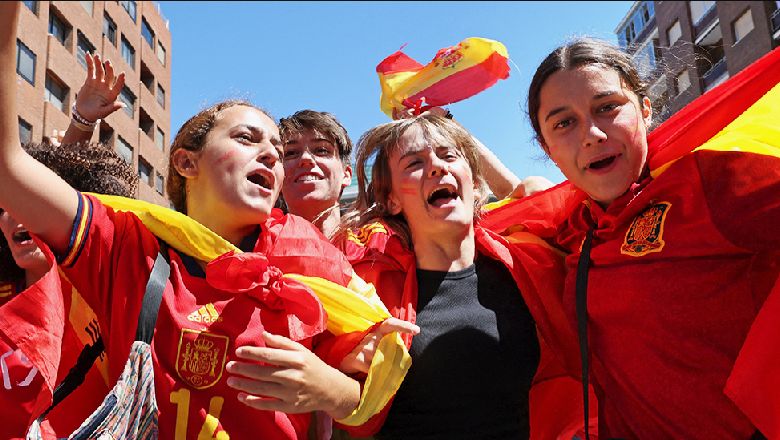
Images of Lionel Messi’s mesmerizing dribbles and Cristiano Ronaldo’s thunderous strikes still flicker on screens in local bars, family restaurants, and humble homes. To truly understand this obsession and ask, "Why is football so popular in Spain?", let us join Flashscoremobi in exploring the profound roots of this phenomenon.
Why is football so popular in Spain?
Regional identity
The popularity of the sport began in 1872 when British miners introduced the game in Huelva, leading to the birth of Real Club Recreativo de Huelva. This historical anchor makes football older than many modern Spanish political institutions.
Unlike other nations where sports may be fragmented, Spain unified around football early on. The sport provides a unique platform for regional expression. For instance, Barcelona is famously "Més que un club," acting as a cultural ambassador for Catalonia. Similarly, Athletic Bilbao’s policy of only fielding players of Basque heritage reinforces regional pride. These are not just teams; they are symbols of identity that turn every match into a narrative of history and local resistance.
The psychological catharsis of the goal
In a sport where scoring is rare compared to basketball or tennis, a goal in Spain is treated as an "epic event." Experts argue that this rarity creates a unique form of suspense and "catharsis." When a goal is scored, it represents the culmination of immense physical effort and technical perfection.
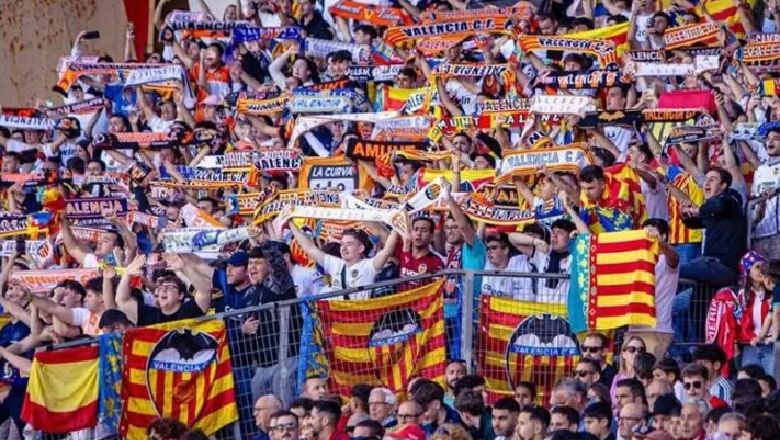
For many Spaniards, a goal is a moment of pure freedom where daily problems vanish. As noted in several cultural studies, the "magic" of the goal provides a spiritual release that few other activities can offer, making the 90-minute wait an essential part of the emotional payoff.
The unifying power of the ball and social equality
In a country often divided by political views or economic status, football serves as the ultimate "equalizer." On a match day, the distinction between a CEO and a manual laborer disappears as they wear the same jersey and chant in unison.
Research shows that football is the one subject where Spaniards of all backgrounds can reach a consensus. You only need 2 people and something to kick to start a game, making it the most democratic sport in the country.
Economic dominance and the "Tiki-Taka" influence
The economic impact of football is staggering, contributing billions of Euros to the Spanish GDP through tourism, broadcasting rights, and merchandise. Iconic stadiums like the Santiago Bernabéu and Camp Nou are global tourist magnets, boosting local businesses and creating thousands of jobs.
Furthermore, the "Golden Era" (2008-2012) revolutionized the game globally through "Tiki-Taka." This style of short, precise passing became a source of immense national pride, proving that Spanish tactical intelligence could dominate the world stage. This success turned the national team into a unifying force that transcends regional tensions, particularly during the FIFA World Cup and UEFA Euro championships.
The grassroots culture
From a very young age, Spanish children are immersed in a "grassroots" culture. Every neighborhood has a local pitch, and supporting a club is a family tradition passed down through generations. Match days are cherished moments of togetherness, where families gather at home or in tapas bars to share the experience.
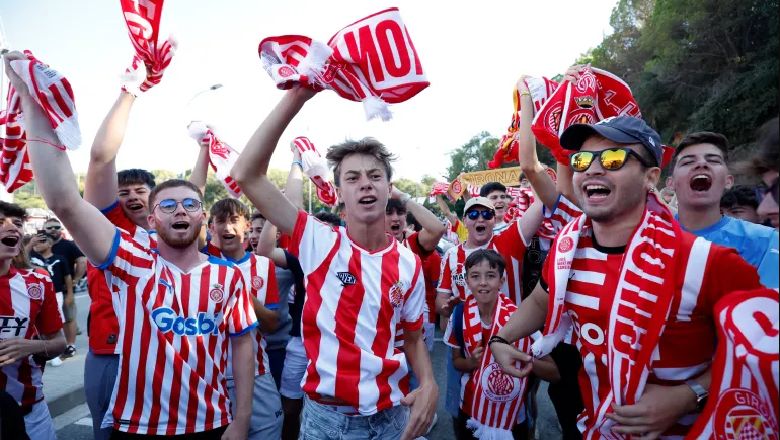
This deep-rooted social habit ensures that the passion for the sport is renewed with every new generation. Furthermore, the recent rise of women’s football, highlighted by the 2023 World Cup victory, has expanded the sport's reach, inspiring millions of young girls and proving that football truly belongs to everyone in Spain.
Reasons why football dominates Spain:
Deep historical roots
Regional symbolism
Social equalizer
Emotional catharsis
Global marketing & soft power
Economic pillar
Daily cultural integration
If you harbor a passion for the "beautiful game" that mirrors the way Spaniards cherish every moment on the pitch, you are part of a global family. This article by Flashscoremobi.com has detailed the multifaceted reasons why is football so popular in Spain?, and we hope it provides you with a more comprehensive perspective on the culture of the "Land of the Setting Sun."
With the mission of a professional sports platform, Flashscoremobi is dedicated to providing you with the highest quality experiences. Beyond in-depth articles, we offer a diverse, fast, and modern statistical platform covering every football match on the planet.
We provide objective, multi-dimensional perspectives through our pre-match and post-match analyses. Furthermore, we constantly update the latest breaking news and match schedules for the world’s leading leagues, ensuring you never miss a beat of the action.
The Most Popular
-
 How many games are there in a Bundesliga season per team?
 -
 6 Brazil's biggest wins in football history: The shocking 9-goal thrashing of Argentina
 -
 Ranking the 5 dark horses for the 2026 World Cup: Waiting for Haaland’s debut, 2 Asian teams to watch
 -
 10 football players who played for Real Madrid and Barcelona: Figo the “traitor”, Eto'o’s costly mistake
 -
 What position does Erling Haaland play?
 -
 Brazil national football team squad for the 2026 World Cup predicted: Casemiro’s last shot, Neymar in the spotlight
 -
 Why did De Bruyne leave Man City?
 -
 How much did Real Madrid pay for Camavinga?
 -
 How much did Real Madrid pay for Eden Hazard?
 -
 Who is Federico Valverde?