
Facts about George Best: Goals, alcohol and a wild life few people knew
Best was more than just a footballer; he was a goldmine for British tabloids. It was often remarked that for every breathtaking goal he scored on the pitch, he would match it with a glass of champagne or a night out with a beauty queen in the city’s most exclusive clubs.
This unique duality is why even those who never watched a full match knew his name. On the grass, he represented the pinnacle of aesthetic football, but once he disappeared into the tunnel, he embraced the role of the "devil," living a life fueled by alcohol, obsession, and controversy.
Whether you are curious about how many goals he actually scored or his legendary "off-pitch" conquests, this comprehensive list of facts about George Best provided by Flashscoremobi offers a deep dive into the man, the myth, and the mayhem.
20+ facts about George Best
Best was a rare talent who combined balance, pace, and an almost supernatural ability to manipulate the ball. During his illustrious career at Manchester United, he made 361 appearances and found the back of the net 137 times. His most prolific period occurred between 1966 and 1972, where he remarkably served as United’s top scorer for 6 consecutive seasons.
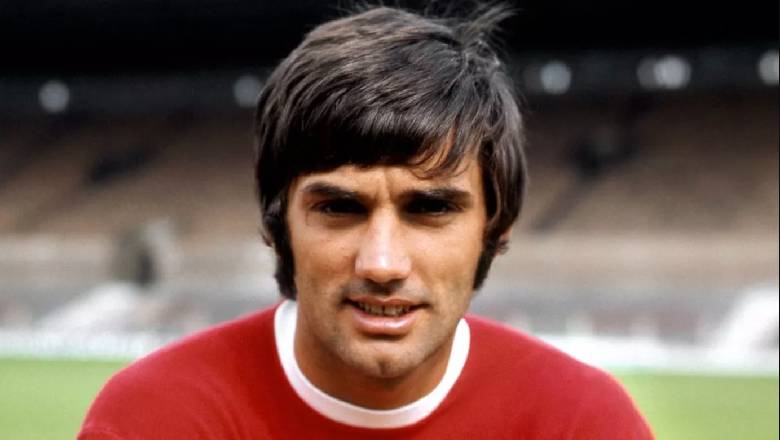
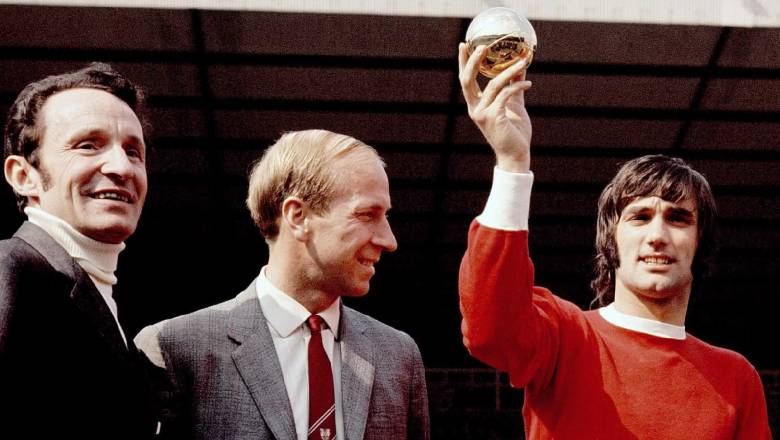
Perhaps the most iconic moment of his professional life came in 1968. After leading United to a European Cup victory, he was awarded the Ballon d’Or, beating out legends like Bobby Charlton and Dragan Džajić. By the age of 22, he had already secured the league title, the European Cup, and the title of European Footballer of the Year.
Beyond the trophies, his individual performances were often historic. In 1970, during an FA Cup tie against Northampton Town, Best scored 6 goals in a single match, a feat punctuated by a celebration so iconic it is still replayed today.
Despite his global fame, he remains widely regarded as the greatest player never to have graced a World Cup stage, though his 37 caps and 9 goals for Northern Ireland provided many "what if" moments, including a famous disallowed goal against England in 1971.
Transitioning from the athlete to the cultural icon, Best was arguably the first "celebrity footballer." Long before the era of David Beckham, Best was the prototype for the modern sports star. The Portuguese media famously dubbed him "O Quinto Beatle" (The Fifth Beatle) after he tore Benfica apart in 1966.
This rock-star status was not just a label, it was a business. He co-owned several boutiques in Manchester, such as "George Best Edwardia," which catered to the "extrovert male." On the day of its opening, the city of Manchester reportedly came to a standstill as thousands crowded the streets just to catch a glimpse of him.
His marketability extended to everyday households through memorable commercials. Most notably, he starred in advertisements for Cookstown sausages, leading to the famous tagline, "the Best family sausages." Even today, a memorial stands outside the Cookstown factory to commemorate this unlikely partnership.
However, his fame had a darker side. In 1972, the pressure of his status became a matter of life and death when he was forced to withdraw from an international match against Spain following death threats from the IRA.
As the 1970s progressed, the "devil" on his shoulder began to take control. His final game for Man United came on New Year's Day in 1974, a somber 3-0 loss to QPR. From there, his career became a nomadic journey through clubs like Jewish Guild in South Africa, Hibernian in Scotland, and even a brief stint in Hong Kong. His time at Hibernian ended abruptly after a massive drinking session with the French national rugby team.
The low point of his personal struggles was likely in 1984, when he served a 3-month prison sentence for drunk driving and assaulting a police officer. While incarcerated, he even played for the Ford Open Prison team.
His public battle with alcoholism reached a peak during a 1990 interview with Terry Wogan, where a visibly intoxicated Best shocked the audience with his bluntness. Despite a liver transplant later in life, the damage was done. Following his passing in 2005, the world mourned a man who lived a thousand lives in one.
In 2006, the Ulster Bank issued one million commemorative 5-pound notes to honor him, which sold out in just 5 days.
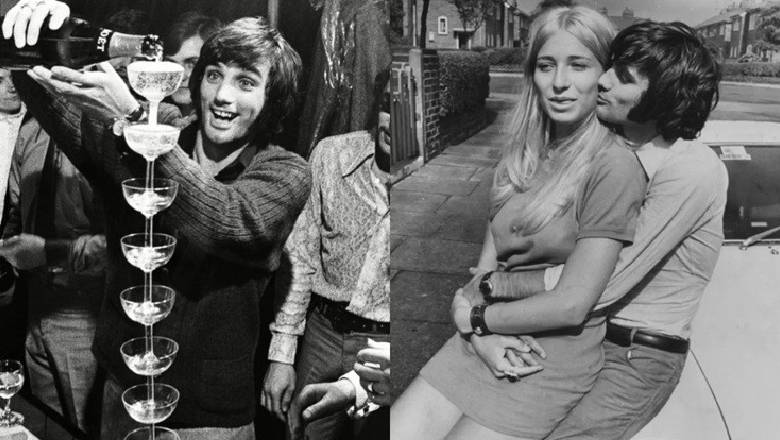
No summary of Best is complete without the words that defined his "swagger." He was famously unapologetic about his lifestyle, once quipping, "I spent a lot of money on booze, birds, and fast cars. The rest I just squandered."
On another occasion, reflecting on his brief attempts at sobriety, he joked, "In 1969 I gave up women and alcohol, it was the worst 20 minutes of my life." Even his mischievous nature was legendary, as seen in his quote: "I used to go missing a lot... Miss Canada, Miss United Kingdom, Miss World."
Flashscoremobi.com has just revealed over 20 facts about George Best that highlight the extraordinary complexity of his character. Whether you admire him as a footballing inspiration who could dribble past an entire team with ease, or as a human being who lived entirely on his own terms regardless of the cost?
Your ultimate destination for football intelligence is here. Access live scoreboards, trending news, and data-driven analysis powered by unique metrics. We are committed to delivering a seamless and high-quality experience, bringing you closer to the pitch with information that others often miss.
The Most Popular
-
 How many games are there in a Bundesliga season per team?
 -
 Why is football so popular in Spain?
 -
 6 Brazil's biggest wins in football history: The shocking 9-goal thrashing of Argentina
 -
 Ranking the 5 dark horses for the 2026 World Cup: Waiting for Haaland’s debut, 2 Asian teams to watch
 -
 10 football players who played for Real Madrid and Barcelona: Figo the “traitor”, Eto'o’s costly mistake
 -
 What position does Erling Haaland play?
 -
 Brazil national football team squad for the 2026 World Cup predicted: Casemiro’s last shot, Neymar in the spotlight
 -
 Why did De Bruyne leave Man City?
 -
 How much did Real Madrid pay for Camavinga?
 -
 How much did Real Madrid pay for Eden Hazard?