
Why does Barcelona wear red and blue?
Red and blue are arguably the most ubiquitous colors in football. Across the globe, these two shades often represent fierce cross-town rivals, rarely sharing the same sky. Yet, for Barcelona, known worldwide as the "Blaugrana," these colors were harmonized to create a unique identity that has become synonymous with success in Spain and Europe.
However, cementing this palette was no easy task for the club’s pioneers. A labyrinth of theories and legends surrounds the origin of the kit, leading many to wonder about the "palace secrets" of the Camp Nou. To untangle this web, we must ask the fundamental question: Why does Barcelona wear red and blue?
Why does Barcelona wear red and blue?
On November 29, 1899, Joan Gamper, a Swiss visionary who had recently moved to the Catalan capital, officially founded Foot-Ball Club Barcelona. Gamper was a fascinating figure, a polyglot and a superb athlete who had already made his mark in Switzerland by founding FC Zurich and playing for Excelsior.
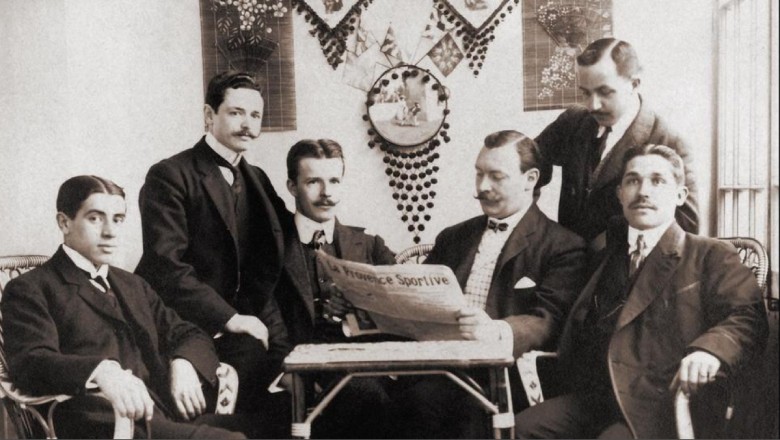
Interestingly, while the club's name was decided at the very first meeting, the colors remained a blank canvas. It wasn't until the second meeting on December 13, 1899, that the famous blau (blue) and grana (garnet) were officially chosen. For the first decade of their existence, this iconic jersey was paired with white shorts.
For over a century, fans and historians have debated the catalyst for this choice. One debunked legend suggested that the mother of the player Comamala chose the colors based on available fabrics, but records show Comamala didn't even debut until 1903.
Another whimsical theory proposed that the red and blue pens used by the club’s accountants influenced the decision. Even the idea that the colors mirrored the Swiss canton of Gamper's birth has been categorically denied. While many locals believed Gamper simply copied his former team, FC Basel, his own granddaughter, Emma Gamper, noted that he was far more attached to Zurich and Excelsior, neither of which wore blue and red.
The most credible evidence points toward the Witty brothers, Frederick Arthur and Ernest, who joined the club at that pivotal second meeting in December 1899. Michael Witty, grandson of Frederick Arthur, testified that his grandfather always maintained the colors were a tribute to the Merchant Taylors’ School in Crosby, Liverpool.
The brothers had played for the school’s rugby team, which famously wore blue and maroon stripes. When the proposal was made, Gamper, being the "alma mater" of the club, likely embraced it because he had briefly worn similar colors at Basel in 1896. This fusion of British school tradition and Swiss approval birthed the most recognizable kit in sports history.
Under this banner, Barcelona evolved through several golden eras. In the early 20th century, the club established itself as a Catalan powerhouse. However, it was the "Dream Team" era under Johan Cruyff in the 1990s and the "Pep Team" era from 2008 to 2012 that truly defined the Blaugrana philosophy. Cruyff introduced a total football approach that prioritized positioning and flair, leading to their first European Cup in 1992. Later, Pep Guardiola refined this into "Tiki-taka," a mesmerizing possession-based style that saw the club win an unprecedented sextuple in 2009.
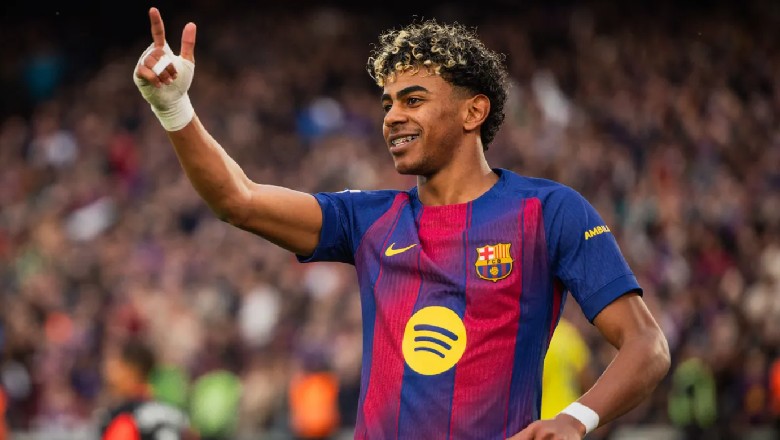
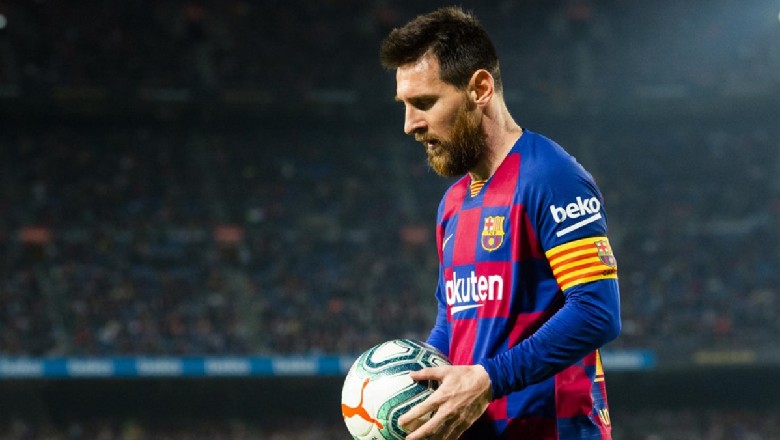
During these periods, the blue and red stripes were donned by titans of the game. Lionel Messi stands as the ultimate icon, scoring 672 goals across 778 appearances, shattering every record in Spanish and European history. Alongside him, the 2013-2017 era saw Neymar Jr. dazzle the world, scoring 105 goals in 186 matches and helping the club secure a historic treble in 2015.
While the red and blue remained the constant home identity, Barca’s away kits have often been used for tactical or symbolic purposes. Throughout history, the club has frequently utilized yellow, orange, or the Senyera (the yellow and red stripes of the Catalan flag).
These colors often represent the club's deep ties to Catalan identity or pay homage to historic nights, such as the orange kit worn during the 1992 final at Wembley. Whether it was the record-breaking 15-game Champions League winning streak of rivals like Bayern Munich or Barca's own dominance, the Blaugrana jersey has always been at the center of football's most dramatic narratives.
Summary of Barcelona’s color evolution:
1899 - 1910: Blue and red striped jersey with white shorts.
1910 - present: Traditional blue and red stripes (Blaugrana) with blue or red shorts.
Key inspiration: Merchant Taylors’ School rugby team (Liverpool) and Joan Gamper’s Swiss influences.
Symbolic elements: The St. George’s Cross (Sant Jordi) and the Senyera stripes in the club crest.
Flashscoremobi.com has sought to answer the enduring question: Why does Barcelona wear red and blue? When you think of this legendary club, which specific season’s jersey first comes to your mind? Whether it is the classic vertical stripes of the Messi era or the bold designs of the 90s, please share your favorite memories with us.
Should you find these historical journeys fascinating, make Flashscoremobi your go-to hub for all things football. Our mission is to provide you with one-of-a-kind articles and tactical recreations that stand out from the crowd. Plus, you’ll never miss a beat with our around-the-clock updates on top-tier clubs, match results, and the kind of expert pre- and post-match analysis that truly deepens your understanding of the game.
The Most Popular
-
 How many games are there in a Bundesliga season per team?
 -
 Why is football so popular in Spain?
 -
 6 Brazil's biggest wins in football history: The shocking 9-goal thrashing of Argentina
 -
 Ranking the 5 dark horses for the 2026 World Cup: Waiting for Haaland’s debut, 2 Asian teams to watch
 -
 10 football players who played for Real Madrid and Barcelona: Figo the “traitor”, Eto'o’s costly mistake
 -
 What position does Erling Haaland play?
 -
 Brazil national football team squad for the 2026 World Cup predicted: Casemiro’s last shot, Neymar in the spotlight
 -
 Why did De Bruyne leave Man City?
 -
 How much did Real Madrid pay for Camavinga?
 -
 How much did Real Madrid pay for Eden Hazard?